Six towns, six sets of tree rules, one crew that knows them all.
Tree removal, crane work, live oak and palmetto care, pine removal, stump grinding, hurricane prep and 24/7 storm response across the Grand Strand, by insured local crews with an ISA Certified Arborist on staff.
ISA Certified Arborist on staff · General liability and workers' comp · Free estimates · Permits checked for your town before a limb comes down
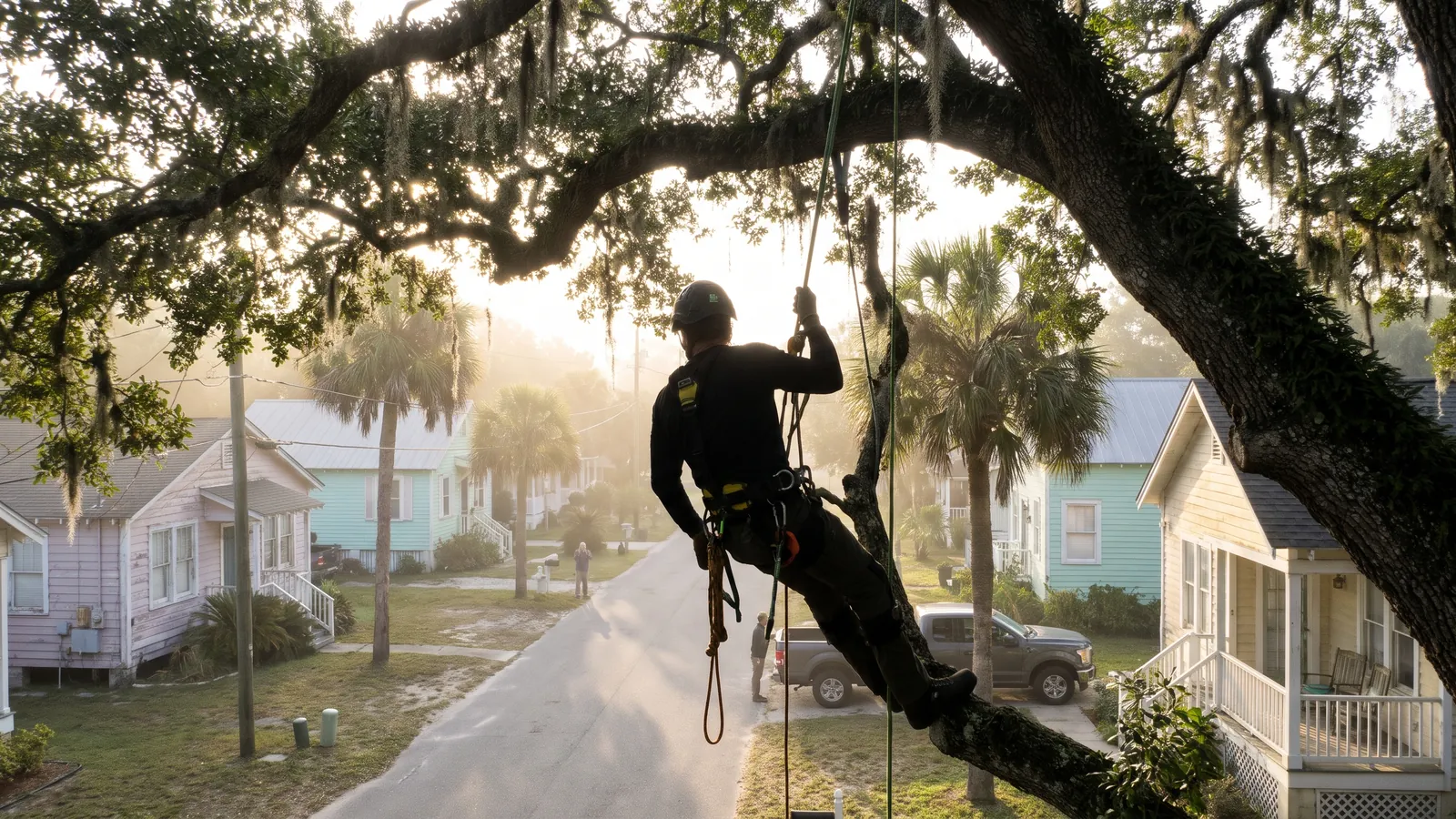
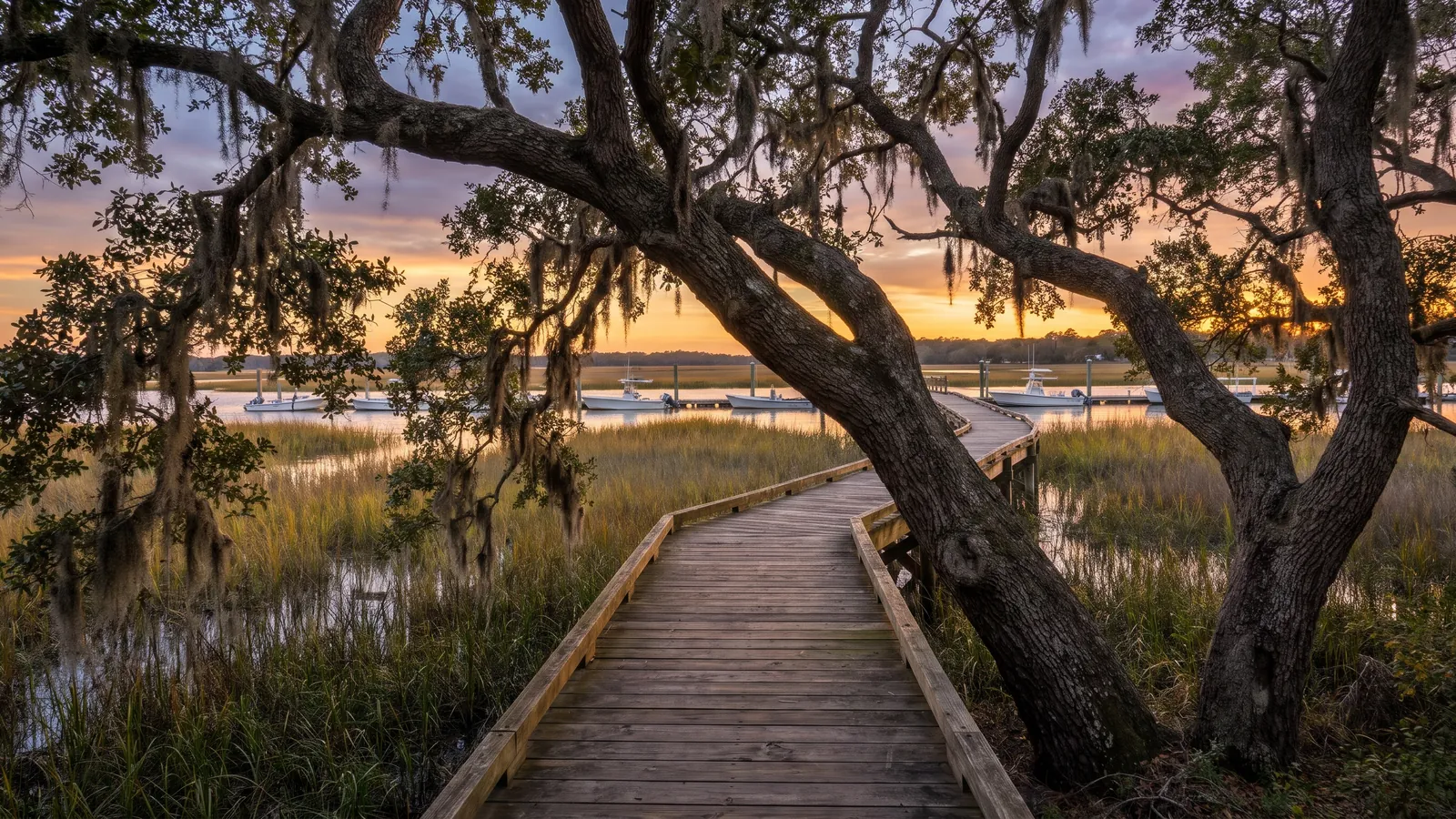
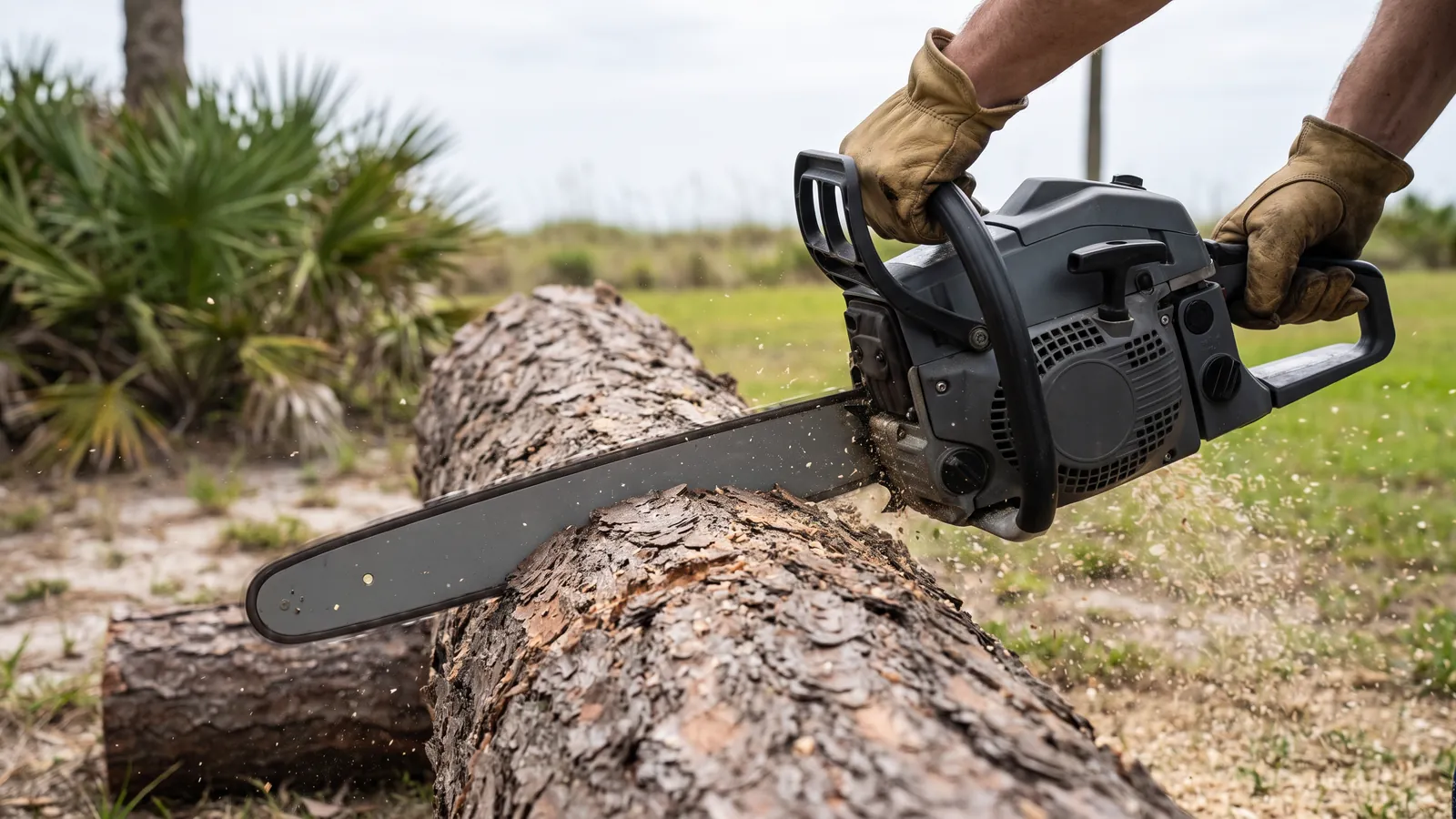
A tree company built for live oaks, loblollies and palmettos on sand
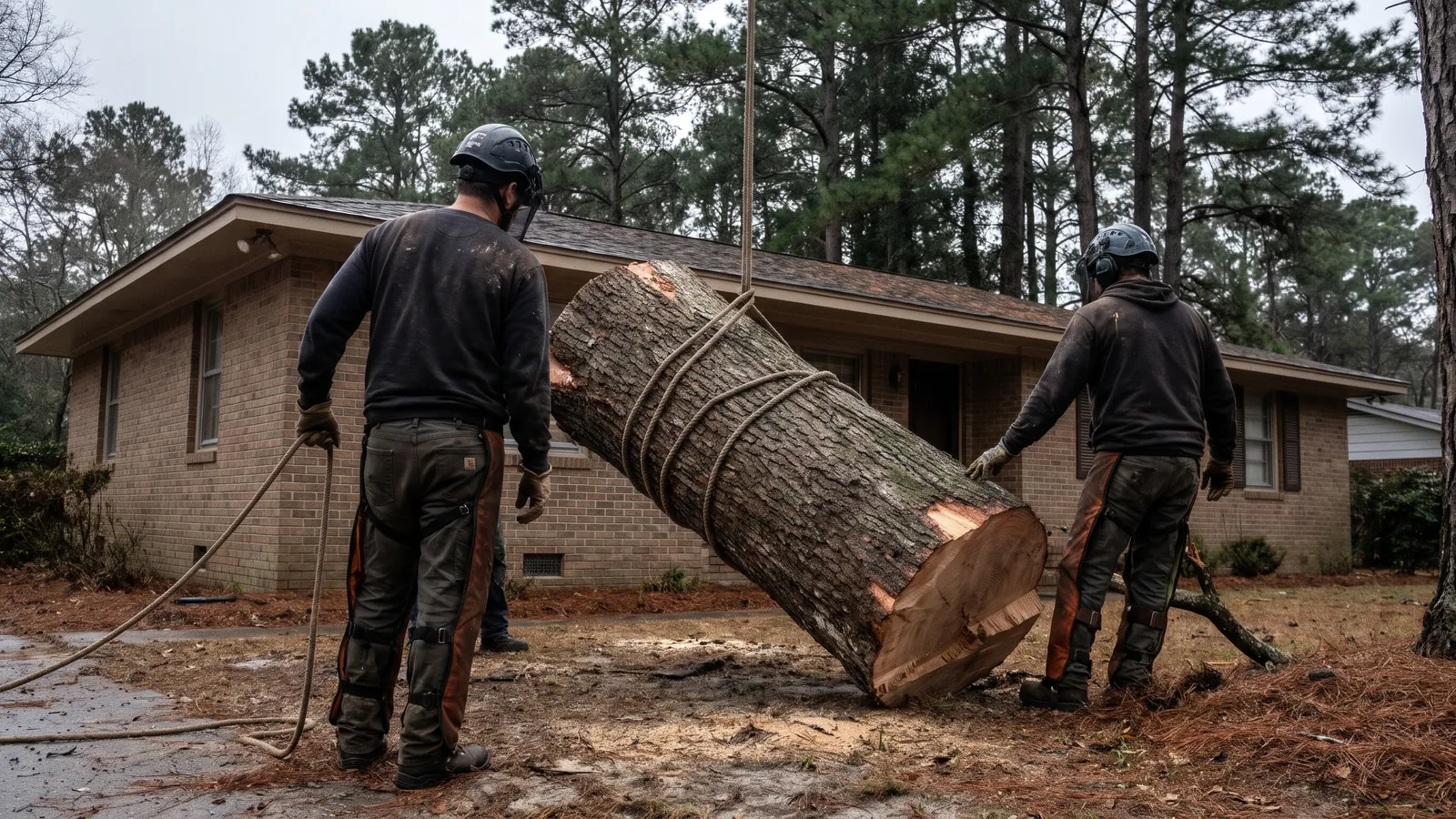
Tree removal, with the permit checked first
Dead pines, hollow laurel oaks, leaning water oaks and the tree over the house, rigged down in pieces, chipped, hauled and raked. Before a limb comes down we check which town the tree is in and what its ordinance says, because on the Strand a live oak can be a landmark with a $10,000 fine attached.
- 24/7 emergency tree serviceany hour, hurricane nights included
- Crane tree removaltall pines, tight beach lots
- Tree trimming & pruningANSI A300, never topping
- Live oak pruning & carelandmark and specimen oaks
- Palmetto & palm trimmingno hurricane cuts
- Pine removal & bark beetlesred needles come down now
- Stump grindingbelow grade, 811 called first
- Hurricane tree prepthinning before June 1
- Storm cleanup & debrishangers, trunks, the curb pile
- Lot clearing & specimen-oak surveysthe county survey first
- Tree permits & arborist reportsevery town on the Strand
Call to cleanup in four steps
Call or send the form
A leaning pine, a hollow oak, a palm that's dropping fronds on the car, a limb on the roof — tell us what you're seeing and which town you're in. We answer around the clock.
An estimator walks the property
Usually within a day or two. They measure the trunk, read the species, the lean, the root flare and the decay, check your town's threshold, and tell you whether the tree really needs to come down.
Written, itemized price
Removal, trimming, crane, stump grinding, haul-off, permit — every line. No deposit until you approve and we schedule.
Done in a day, raked like we weren't there
Most residential jobs are a day. Everything chipped and hauled, the lawn raked, the stump ground if you asked, photos sent the same evening.
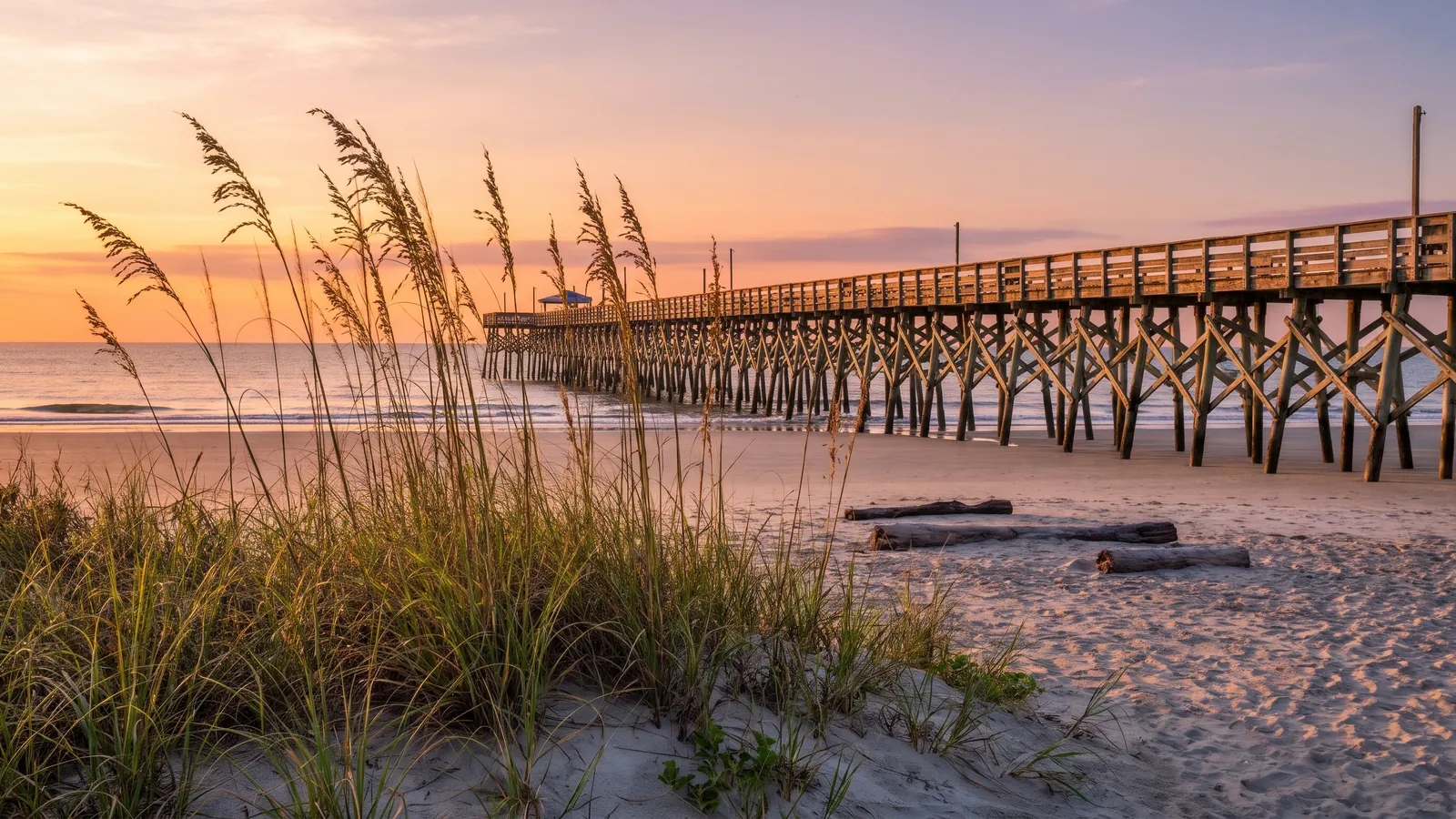
Sixty miles of sand, salt, live oaks and the strictest tree rules in South Carolina
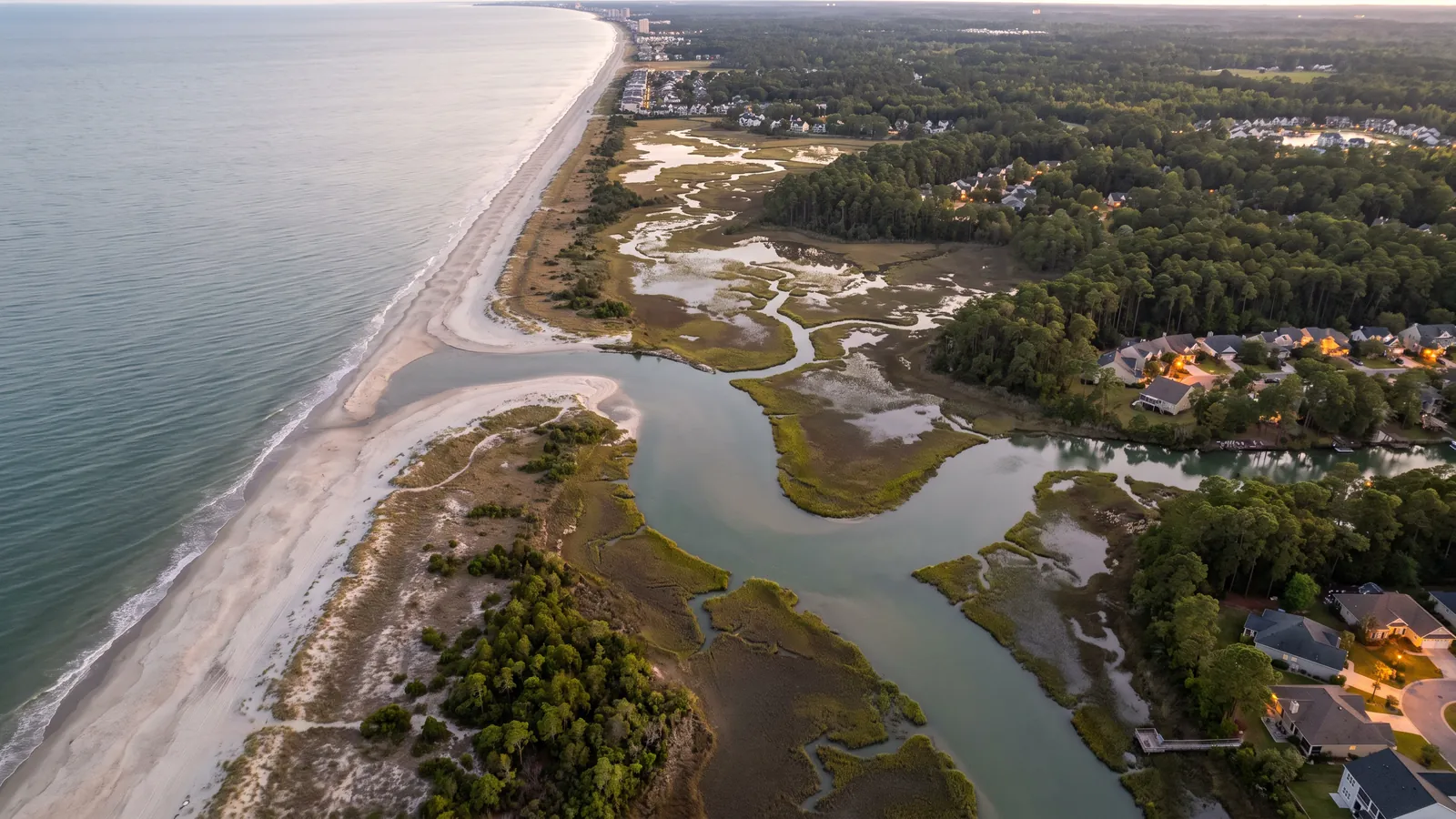
From Little River to Pawleys Island the coast is one long beach ridge: marine sands on the dunes, a hardpan with the water table a foot or two down behind them, peat-filled Carolina bays inland, and the Waccamaw's river clay at Conway. The trees that grow in that sand, live oaks, loblollies and palmettos, each fail in their own way, and each town protects them differently.
Myrtle Beach wrote ANSI pruning standards into its code and fines $10,000 per landmark tree. Horry County made every 24-inch live oak a specimen in 2023. North Myrtle Beach, Surfside, Conway and Pawleys each have their own ordinance. We work in all of them every week, and the estimator checks your town's threshold before a saw starts.
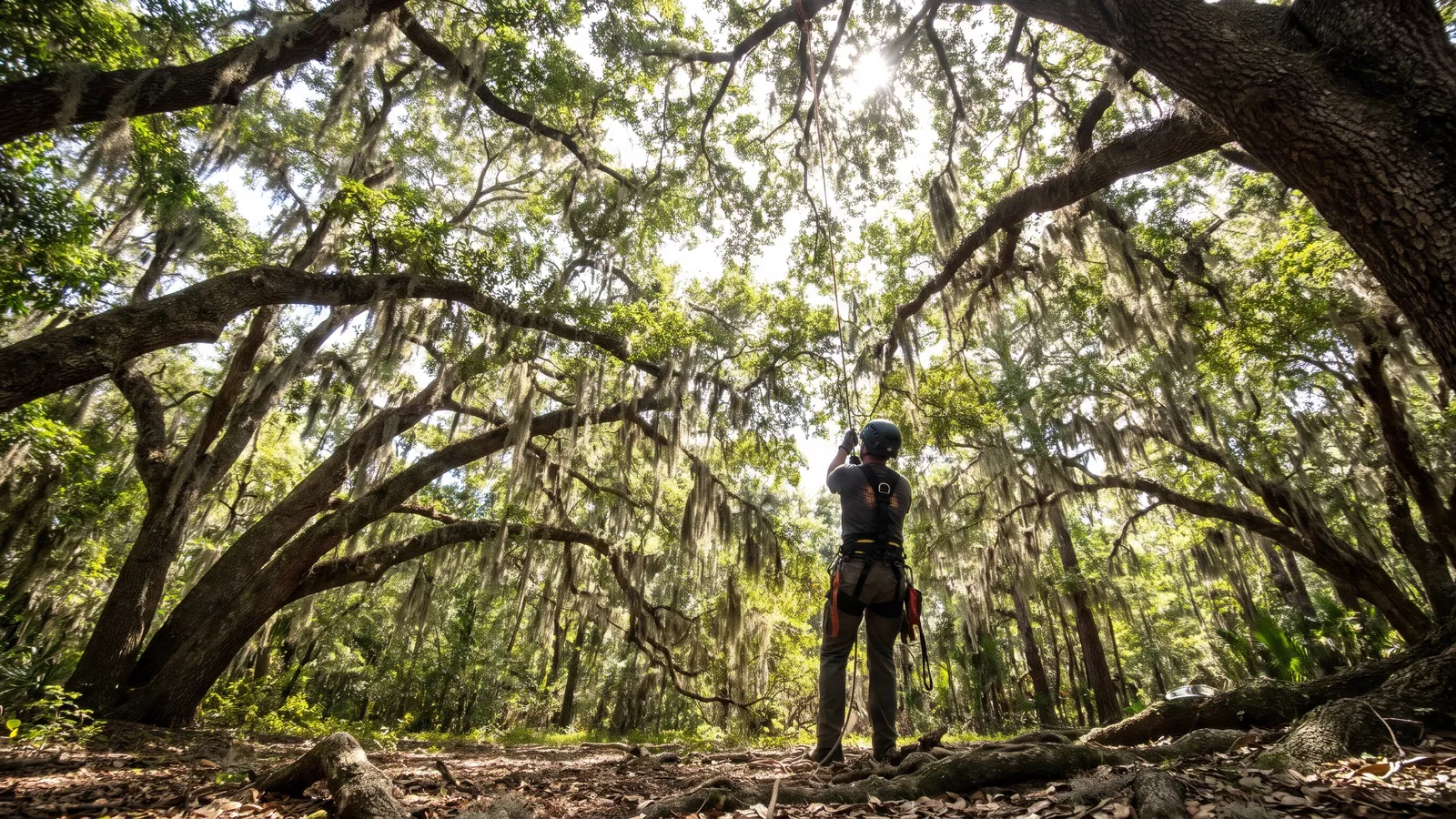
Questions Grand Strand homeowners ask us
How much does tree removal cost in Myrtle Beach?
In 2026 most Grand Strand removals run $350 to $1,500, with the average around $750. By height: a tree under 25 feet is $200–$600, a 25-to-50-foot laurel oak or pine $500–$1,300, a 50-to-75-footer $1,200–$2,800, and an 80-foot loblolly or a big live oak over a house $2,500–$5,000 or more. Palmettos run $200–$900, crane jobs $2,500–$7,500, and stump grinding $3–$5 per inch of diameter with a $100–$150 minimum. Every price we give is in writing after an estimator has walked the property.
Do I need a permit to remove a tree in Myrtle Beach?
It depends on the tree and which town you're in, and the rules on the Grand Strand are stricter than most people expect. Inside the City of Myrtle Beach a single-family lot only needs a permit for 'significant' trees — live oak, white oak, red cedar, magnolia and bald cypress four inches or more in diameter — and a live oak 25 inches or bigger is a 'landmark' that carries a $10,000-per-tree penalty if it comes down without approval. Unincorporated Horry County protects every live oak 24 inches and up, even on house lots. North Myrtle Beach lets you cut anything up to 16 inches without a permit and exempts pines entirely. Conway, Surfside Beach, Georgetown County and Pawleys Island each have their own thresholds. We check the parcel before we cut; see the town-by-town guide.
Which trees fail here in hurricanes?
Laurel oaks, water oaks, pecans, Bradford pears and Chinese tallow are at the bottom of the wind-resistance rankings; live oaks, sand live oaks, sabal palmettos, magnolias and bald cypress are at the top. Live oaks came through Florida's worst hurricanes at 91 to 96 percent survival. The twist on the Strand is the ground: our sands sit on a water table a foot or two down, so a well-rooted pine or oak can go over whole once the soil is saturated. Florence dropped more than 23 inches of rain on Loris, and the trees that fell afterward weren't rotten — they were floating.
Can you take down a live oak?
Only when it has earned it, and only with the right paperwork. On the Grand Strand a big live oak is protected almost everywhere — landmark status in Myrtle Beach at 25 inches, specimen status in Horry County at 24 inches, Tree Board approval in Conway, a permit at 10 inches on the Waccamaw Neck. Our ISA Certified Arborist assesses the tree, and if it's hazardous, diseased or declining we document it and handle the permit. If it isn't, we tell you so, and we prune instead. Most live oaks people want removed only need their deadwood taken and their weight reduced over the roof.
What happens to my dead pine if I leave it?
Loblolly and longleaf pines along the Strand get hit by Ips engraver beetles and black turpentine beetles after lightning, drought, construction damage or a storm. A pine whose needles have turned red or brown is already dead. It dries, the roots rot in the wet sand, and it falls in the next storm toward whatever is heaviest beneath it. Red needles with pitch tubes on the bark means remove it now, before the beetles emerge into the next pine; gray needles means the beetles have moved on and the tree is just a hazard to deal with.
Do you really answer at night?
24 hours a day, every day, including the morning after a hurricane. If a pine is through the roof at 2 AM, call — a person picks up, a crew is dispatched by priority, and the paperwork happens after the tree is off the house.
Which rule applies to your tree?
The Strand's towns protect trees at different sizes. The short version:
| Myrtle Beach | Live oak, white oak, red cedar, magnolia, cypress from 4 in need a permit; live oak 25 in+ is a landmark ($10,000 fine) |
| Horry County | Every live oak 24 in+ is a specimen, even on house lots |
| North Myrtle Beach | Anything up to 16 in, and pines of any size, no permit |
| Conway | Live oaks 24 in+ and the Oaks of Conway map go to the Tree Board |
| Surfside Beach | Any tree over 8 in needs a permit |
| Pawleys · Litchfield · Murrells Inlet | Georgetown County: every tree 10 in+ ($500 per inch fines) |
Four trees that keep our phone ringing
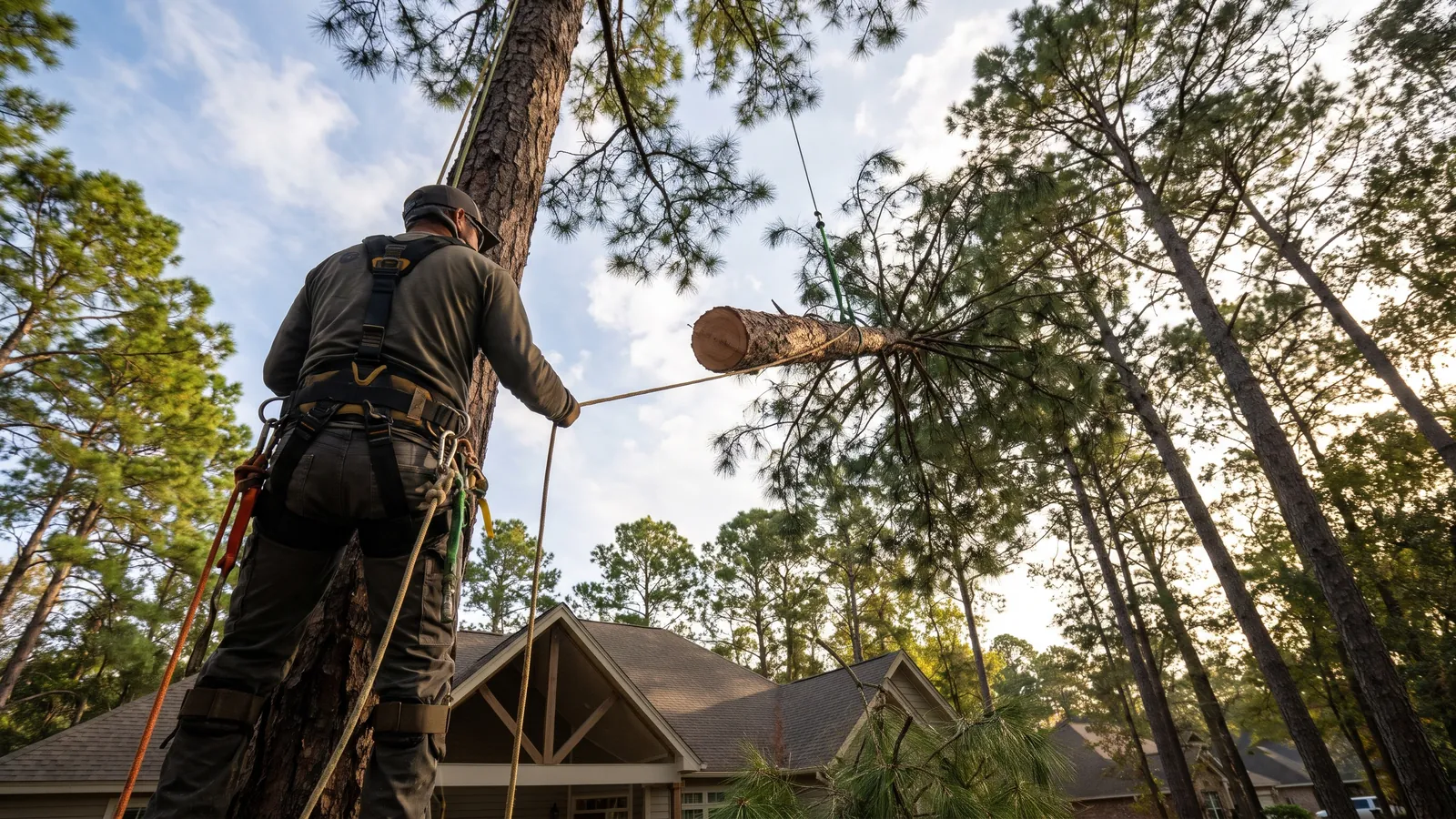
Beetle-killed loblollies
Ips engraver and black turpentine beetles hit pines stressed by lightning, drought, construction and storms. Needles go red, then gray; the tree is dead either way and sheds limbs for a year before it falls.
Pine removal →Laurel & water oaks
Planted because they grow fast, failing because they don't last: laurel oaks live 50 to 70 years and hollow out, water oaks rot by 50. Both rank at the bottom for wind resistance. The most common removal we do.
Removal →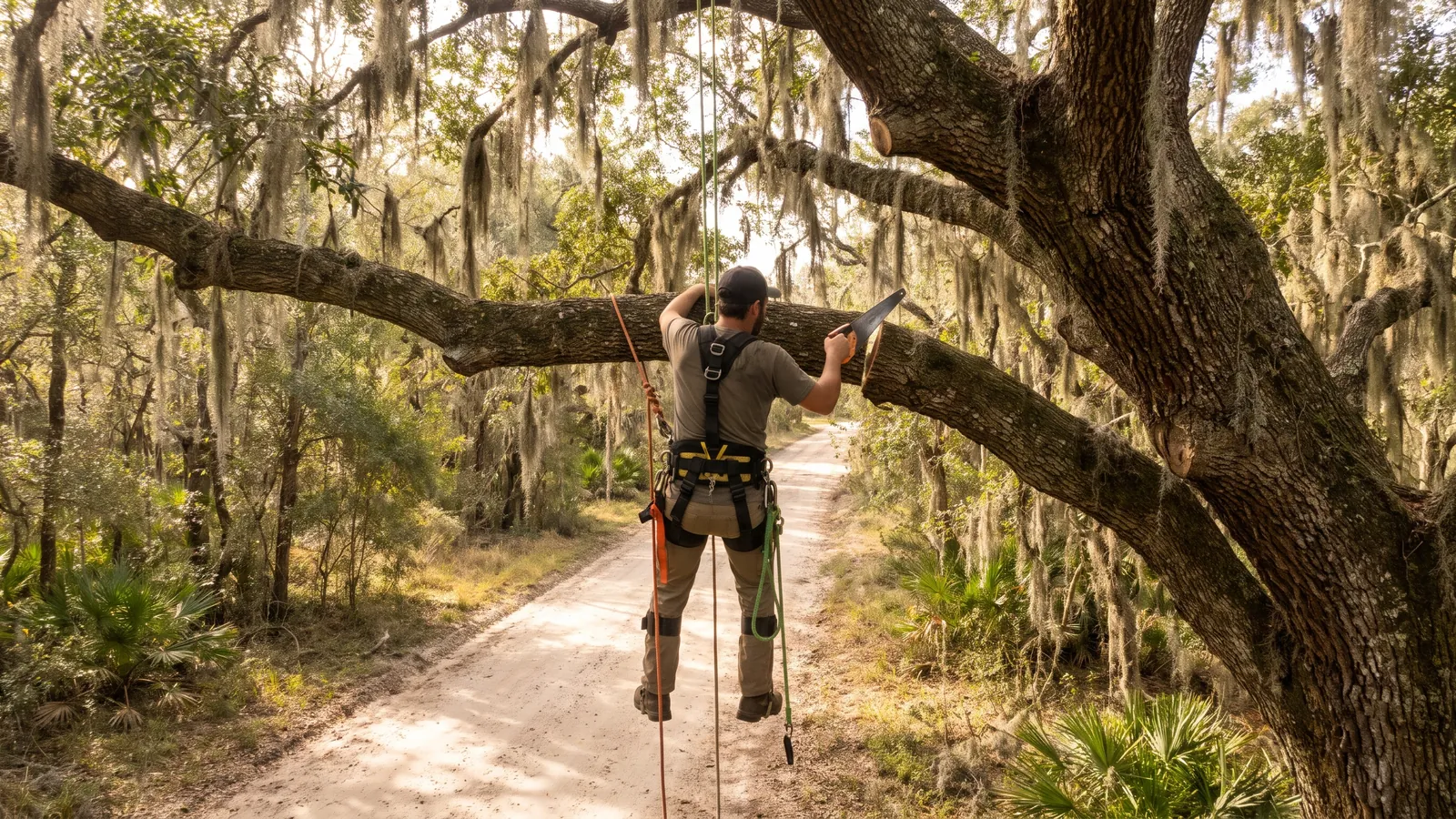
Live oaks
The best tree on the Strand — highest wind resistance, salt tolerant, centuries of life — and the most regulated. Landmark, specimen, Tree Board. Almost never a removal; nearly always a pruning and a permit question.
Live oak care →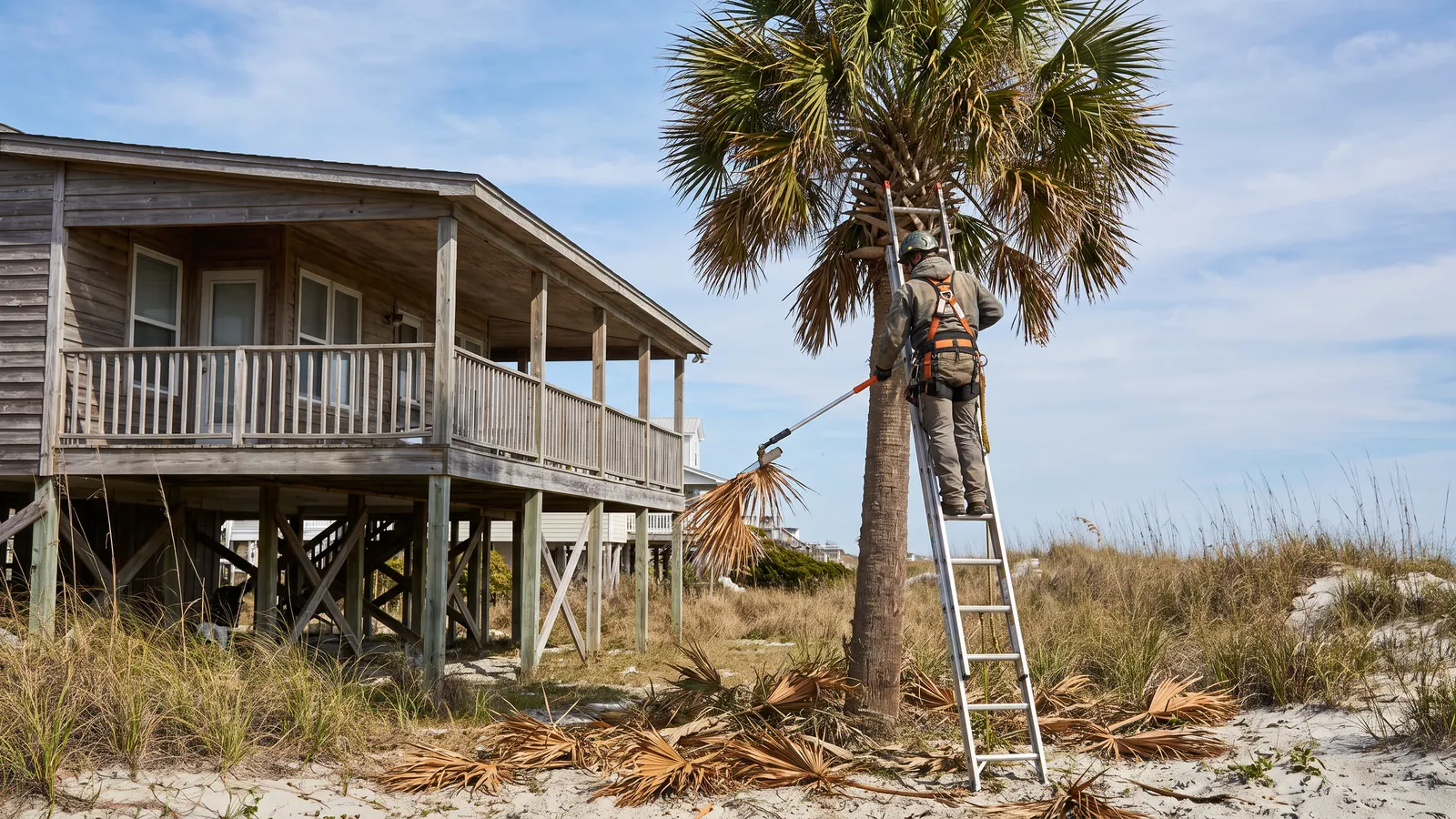
Palmettos & palms
The state tree needs almost nothing: dead fronds, boots and seed stalks, once a year. The 'hurricane cut' everybody sells is what makes palms fail. We prune to the horizontal and no higher.
Palm trimming →From Grande Dunes and Pine Lakes to Conway, Pawleys and the whole Strand
We're across Myrtle Beach every week: the north end from Grande Dunes to Arcadian Shores and Dunes Club, the oceanfront and the 1920s canopy of Pine Lakes, the Market Common and the south end, Forestbrook and Socastee along the Waterway, and the pines of Carolina Forest.
Beyond the city we cover North Myrtle Beach and Cherry Grove, Conway and its landmark oaks, Surfside Beach and Garden City, Murrells Inlet, Pawleys Island and Litchfield, Little River and Longs, and Loris and Aynor — the whole of Horry County and the Waccamaw Neck of Georgetown County.
Book a free tree estimate
We call back the same day. The estimator sees the tree in person and the price goes on paper.
Got a tree that worries you?
Free on-site estimate, a written price, the permit answer for your town, and an honest opinion on whether the tree really needs to come down — plus 24/7 storm response across the Grand Strand.