Crane tree removal in Myrtle Beach — for the trees with nowhere to fall
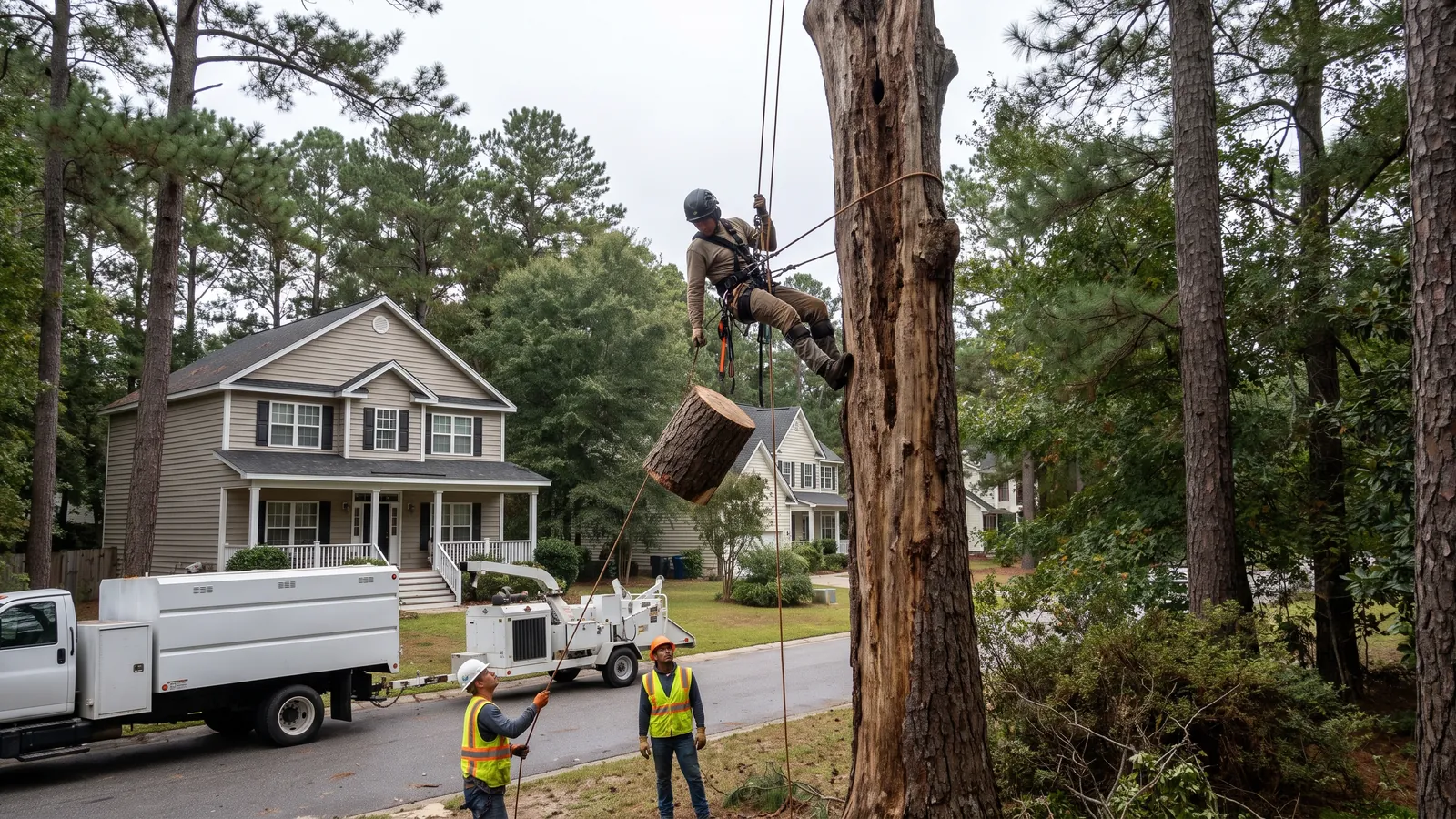
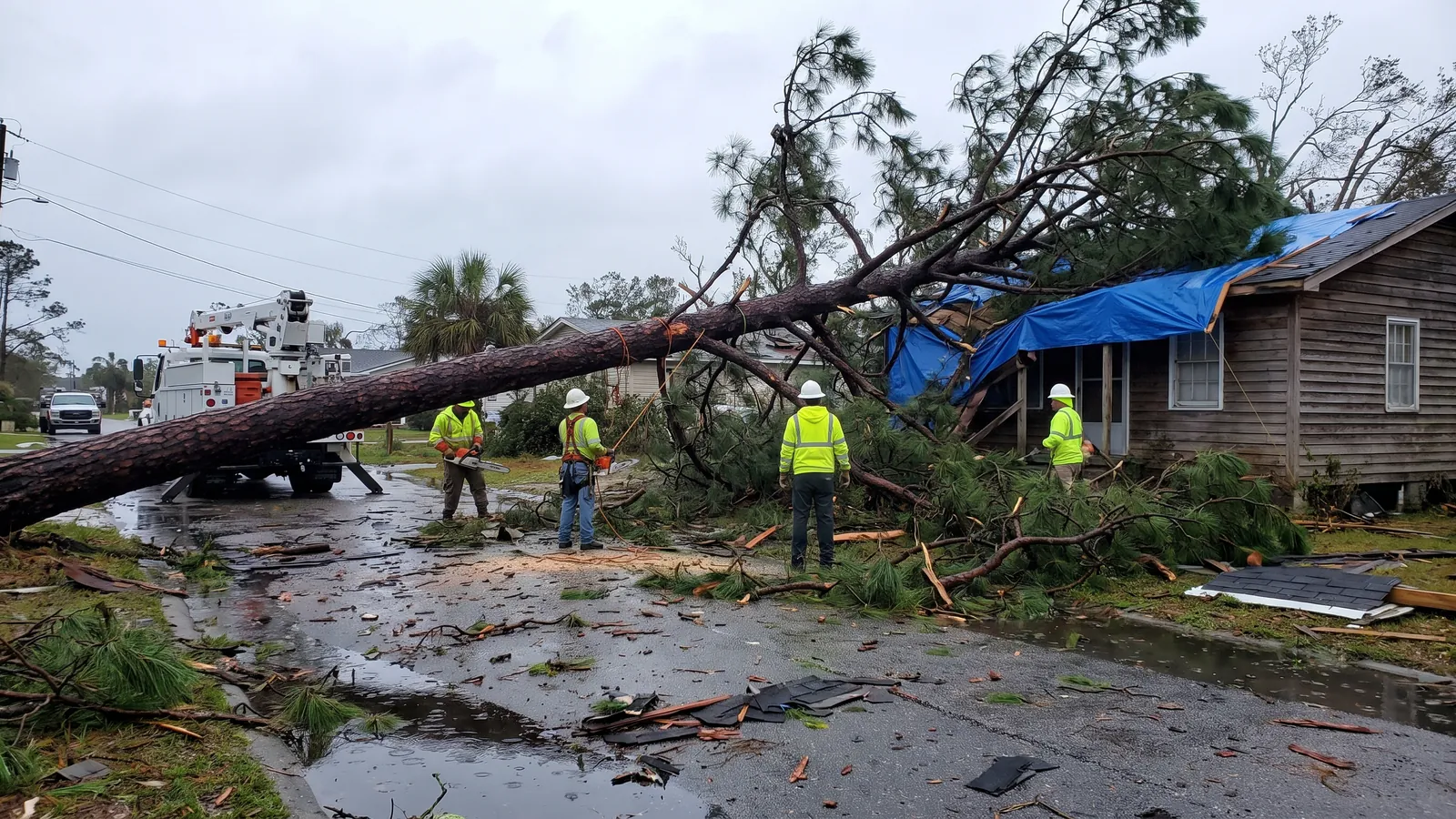
A 90-foot pine over the pool, an oak wedged between two beach houses, a storm-racked trunk that's unsafe to climb: the crane lifts them out in sections and nothing touches the ground until the truck.
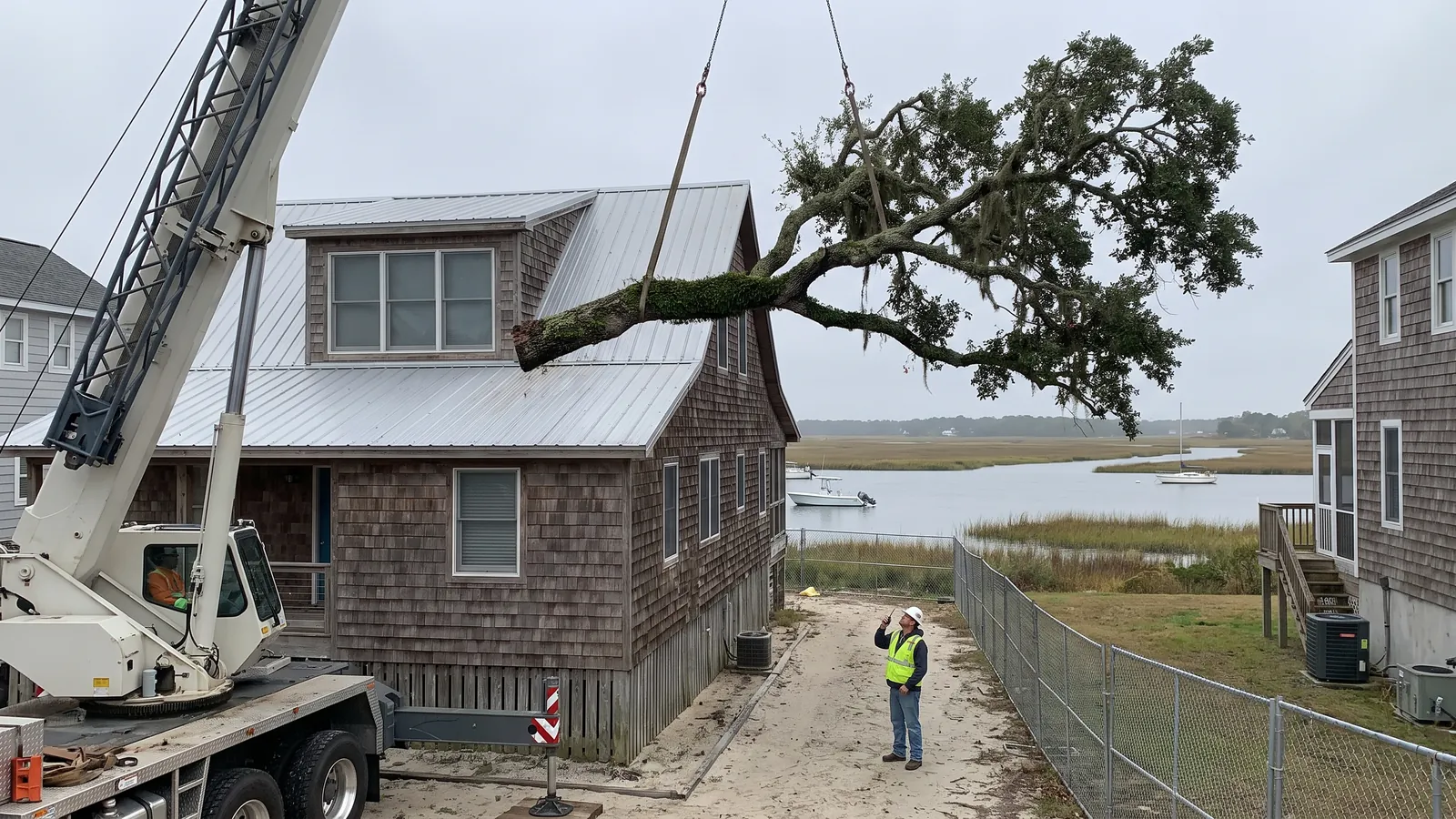
Some trees can't be rigged down the usual way. A loblolly that's 90 feet tall and ten feet from a pool enclosure has no drop zone and no safe place for a climber to work above the screen. A hollow laurel oak that's split in a storm is too unstable to climb. A big oak with a canopy over three roofs on a Cherry Grove street would take a crew two days of small pieces. For those, a crane changes everything: a certified operator sets up in the street or the driveway, a climber or an aerial-lift operator rigs each section to the hook, the crane takes the weight before the cut, and the piece swings out over the house to the landing zone, where it's bucked and chipped. The tree never touches the roof, the lawn or the fence.
On the Strand that's a regular job, not an exotic one. The beach lots in North Myrtle Beach, Surfside and Garden City are 50 feet wide with houses on pilings, Grande Dunes and the Waterway neighborhoods have big oaks over big houses, Carolina Forest is pines over pools, and after every hurricane there are trees leaning on houses that no one should climb. A crane removal costs more than a conventional one — $2,500 to $7,500 for most residential jobs, with the crane itself adding $600 to $5,400 depending on size and hours — but it's often cheaper than a two-day rigging job, and it's far safer. We handle the crane booking, the right-of-way permit if the crane has to sit in a city street, outrigger mats on paver driveways, and the neighbors' driveways.
What's included
Certified crane operator
Licensed, insured crane services with the right capacity for the picks.
Arborist-rigged picks
Every section weighed and rigged by our crew; the crane takes the load before the cut.
Nothing touches the house
Sections swing over the roof, the pool and the fence to the landing zone.
Storm-damaged trees
The safe way to take a split or leaning trunk nobody should climb.
Right-of-way permits
Street permits and traffic control when the crane sits in a town street; outrigger mats on pavers.
Same-day cleanup
Bucked, chipped and hauled as the sections come down; the stump ground after.
Crane tree removal cost in Myrtle Beach, SC
| Job | Typical price | Notes |
|---|---|---|
| Crane-assisted removal, typical residential | $2,500 – $7,500 | Includes crane, crew, chipping, haul-off |
| Crane add-on to a conventional removal | $600 – $5,400 | Size and hours; half-day minimum common |
| Multiple trees, one crane setup | Quoted | The setup cost is shared — do the neighbors' pines the same day |
| Right-of-way permit and traffic control | $150 – $500 | When the crane sits in the street |
These are 2026 Grand Strand ranges so you can budget. Your written price is itemized — the climb or bucket work, rigging, chipping and haul-off, stump grinding, crane time, the permit for your town — and good for 30 days.
Recent work
Questions we get about crane tree removal
When is a crane cheaper than climbing?
When the alternative is two days of small pieces over a pool or three roofs. A crane turns that into a morning. For a tree in an open yard, climbing or a bucket is cheaper.
Will the crane damage my driveway?
Outriggers go on pads that spread the load; on a paver driveway we add mats. We walk the setup with you first and photograph the surface before and after.
Can the crane reach the back yard on a beach lot?
A 40-ton crane with a 100-foot boom reaches most back yards from the street, and on a 50-foot lot that's the only way in. Where it can't — deep lots on the Waterway — a larger crane or a different approach, and we'll tell you which.
Does a crane removal still need a permit?
The tree permit is the same whichever method we use — it's about the species and size, not the equipment. The crane in the street may need a separate right-of-way permit from the town, which we pull.
Is this what you'd use after a hurricane?
Yes — for the trees leaning on houses that are unsafe to climb. After Florence it was most of our October.