Tree removal in Myrtle Beach, done in pieces, not in one drop
A tree over a Grand Strand house comes down in sections on ropes, not in one swing. We rig it, chip it, haul it and rake — and we check your town's permit rule and tell you first whether it really needs to go.
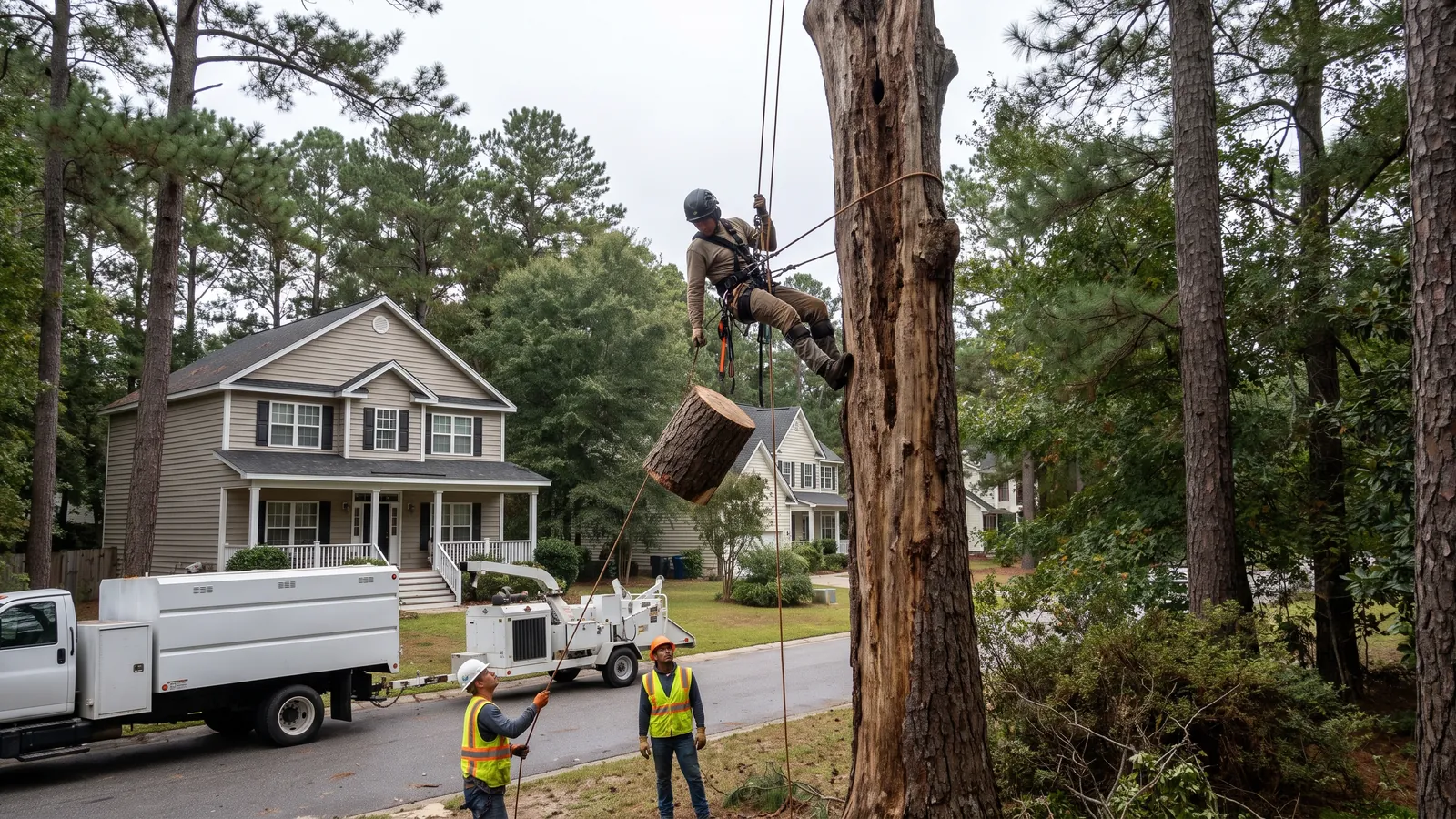
Most of the trees we remove on the Grand Strand are one of four things: a loblolly or longleaf pine that bark beetles, lightning or a storm killed and that's now standing dead over a roof, a pool or a service drop; a laurel oak or water oak in one of the 1970s–90s subdivisions that's reached the end of its 50-to-70-year life and is hollow, leaning, or dropping limbs the size of a car; a tree of any kind that was fine until a hurricane racked it in saturated sand and now it leans toward the house; or a Bradford pear or Chinese tallow that's splitting apart the way those species do. There's a fifth category, which is a live oak somebody told the owner was dangerous and isn't — and on the Strand that tree is usually protected, so we'll tell you if yours is in it before anyone touches it.
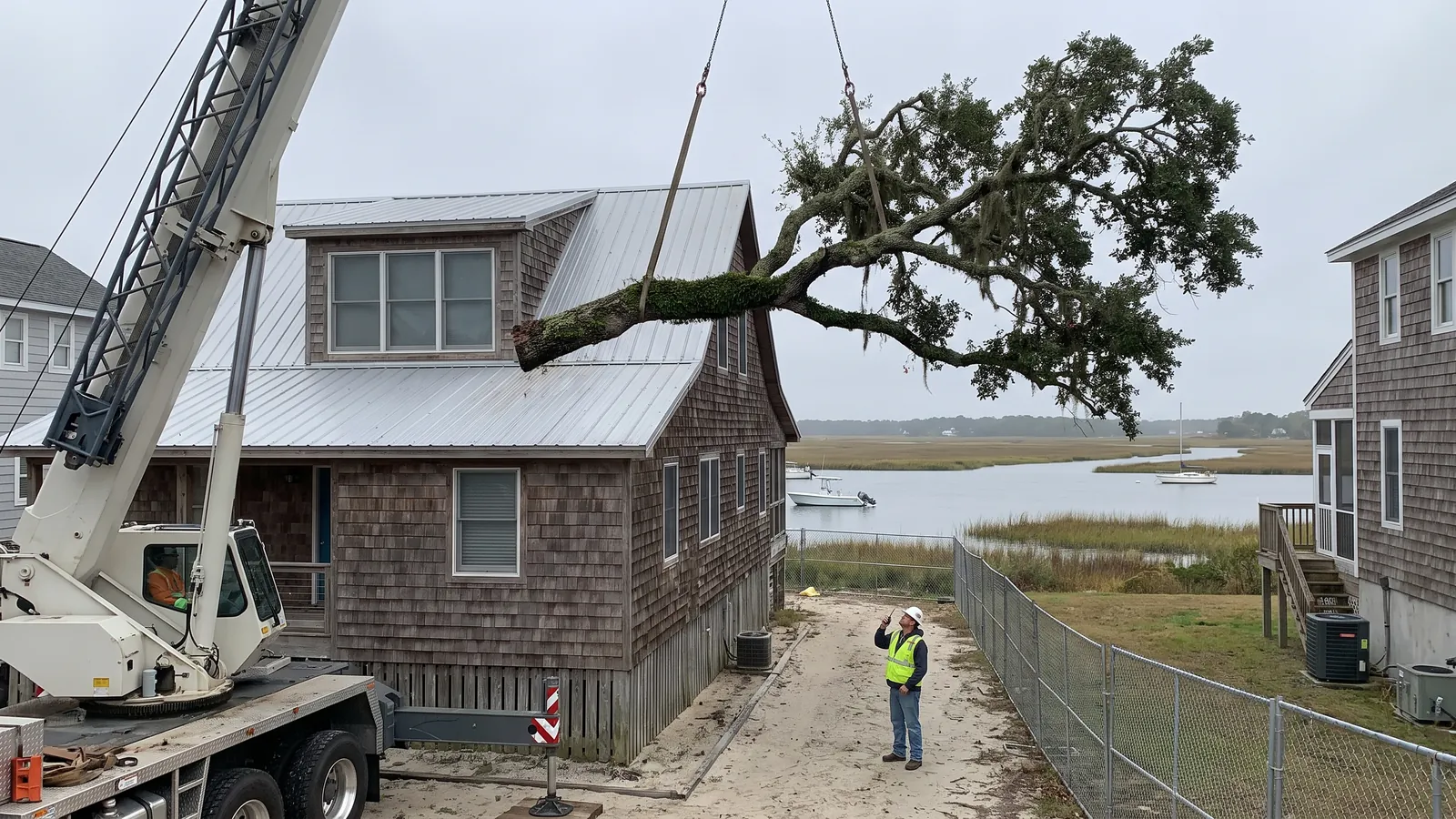
The job itself depends on the drop zone and the ground. On the bigger lots in Carolina Forest, Conway and Longs a tree can sometimes be felled whole. On a 50-foot beach lot in Cherry Grove or Surfside with the house, the neighbor's house, a fence and the street all within the canopy, it comes down in pieces: a climber or a bucket operator takes the limbs and the trunk in sections, each one roped and lowered by a ground crew so nothing lands on anything, and the whole thing goes into the chipper and the truck. For the trees with no drop zone at all — a 90-foot pine over a pool enclosure — we bring a crane. We put mats down on the sand so the equipment doesn't rut the lawn, we haul our own debris because the city and North Myrtle Beach both refuse contractor-generated tree waste, and the certificate of insurance is in your hand before anyone leaves the ground.
What's included
Arborist assessment first
An ISA Certified Arborist reads the species, the lean, the root flare and the decay, and tells you whether the tree really needs to come down.
Permit for your town
Myrtle Beach, North Myrtle Beach, Horry County, Conway, Surfside, Georgetown County, Pawleys — we check the threshold for your parcel and pull the permit when one applies.
Rigged, not dropped
Limbs and trunk sections roped and lowered by a ground crew over roofs, pools, fences and gardens; mats on the sand for the equipment.
Chipped & hauled
Everything we cut goes into the chipper and off the property to the county landfill; firewood left if you want it.
Stump grinding
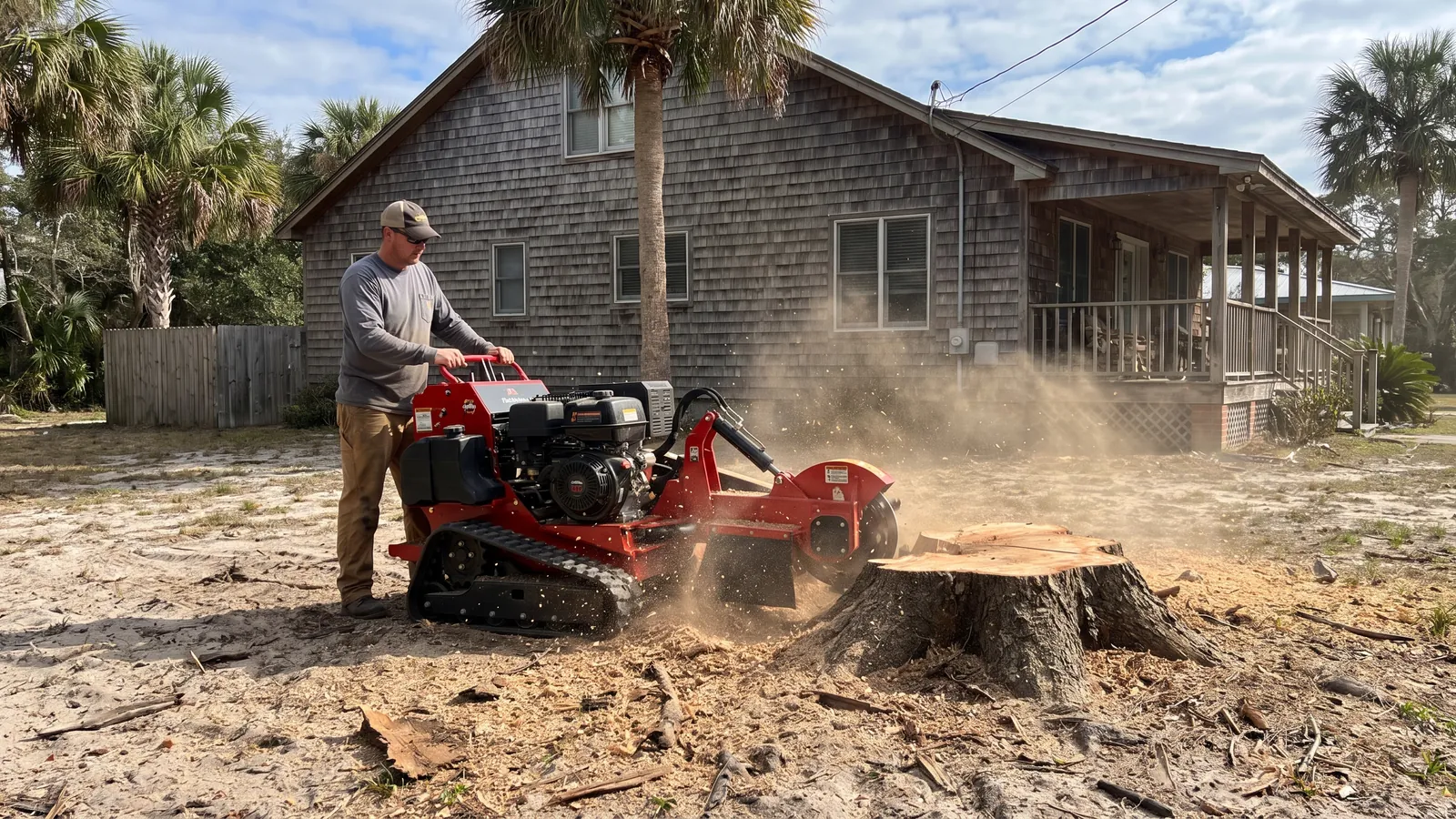
Ground below grade with SC 811 called first; chips hauled or left for mulch.
Insured, in writing
General liability and workers' compensation; the certificate is available before you sign.
Tree removal cost in Myrtle Beach, SC
| Job | Typical price | Notes |
|---|---|---|
| Small tree, under 25 ft | $200 – $600 | Crape myrtle, young oak, small palm, Bradford pear |
| Medium tree, 25–50 ft | $500 – $1,300 | Most laurel oaks, water oaks, mid-size pines |
| Large tree, 50–75 ft | $1,200 – $2,800 | Mature oaks and loblollies |
| Very large, 75 ft and up | $2,500 – $5,000+ | Tall pines, big oaks over structures |
| Palmetto or palm removal | $200 – $900 | See palms |
| Crane-assisted removal | $2,500 – $7,500 | See crane work |
| Stump grinding | $3 – $5 per inch | $100–$150 minimum; 24–36" stump $300–$550 |
| Permit application and arborist letter | $0 – $250 | Conway's permits are free; Myrtle Beach mitigation can add $400 per tree |
| Emergency surcharge | + 20–50% | Storm aftermath, nights, weekends |
These are 2026 Grand Strand ranges so you can budget. Your written price is itemized — the climb or bucket work, rigging, chipping and haul-off, stump grinding, crane time, the permit for your town — and good for 30 days.
Recent work
Questions we get about tree removal
How do you decide if a tree needs to come down?
Species first — a laurel oak at 60 is near its end, a live oak at 60 is a teenager. Then the trunk: hollow sounds, fungal conks, cavities, a lean that's new. Then the roots: heaving in the sand, mushrooms at the flare, construction damage next door. Then the target: what it hits if it fails. A dead pine over a shed is a different call than a dead pine over a bedroom. We walk you through all of it.
Do I need a permit?
Depends on the tree and the town. In Myrtle Beach a single-family lot needs one only for significant species (live oak, white oak, red cedar, magnolia, bald cypress) four inches and up. Horry County protects every live oak 24 inches and up. North Myrtle Beach exempts anything under 16 inches and all pines. Conway, Surfside, Georgetown County and Pawleys each have their own line. We check before we cut; see the permit guide.
Can you take a tree down between two beach houses?
Yes — that's most of our work in Cherry Grove, Surfside and Garden City. It comes down in small sections on ropes, with a ground crew lowering every piece. It takes longer than a drop, and it's why the price is higher than a tree in an open field.
What about the stump?
Grinding is a separate line, $3–$5 per inch of diameter. We put in the SC 811 locate request at least three full working days ahead so the utilities are marked before we grind — stump grinders find gas lines the hard way.
Can I keep the wood?
Yes. Oak rounds left for firewood or a mill, or chips left for mulch, take money off the haul-off line. Just don't plan on the city picking up the rest — Myrtle Beach won't collect anything over four inches or anything a contractor left.