Tree permits and arborist reports for every town on the Grand Strand
Seven jurisdictions, seven thresholds, fines from $500 per inch to $10,000 per tree. We know which rule your tree is under, we write the arborist report the town wants, and we file the application so the removal is approved instead of penalized.
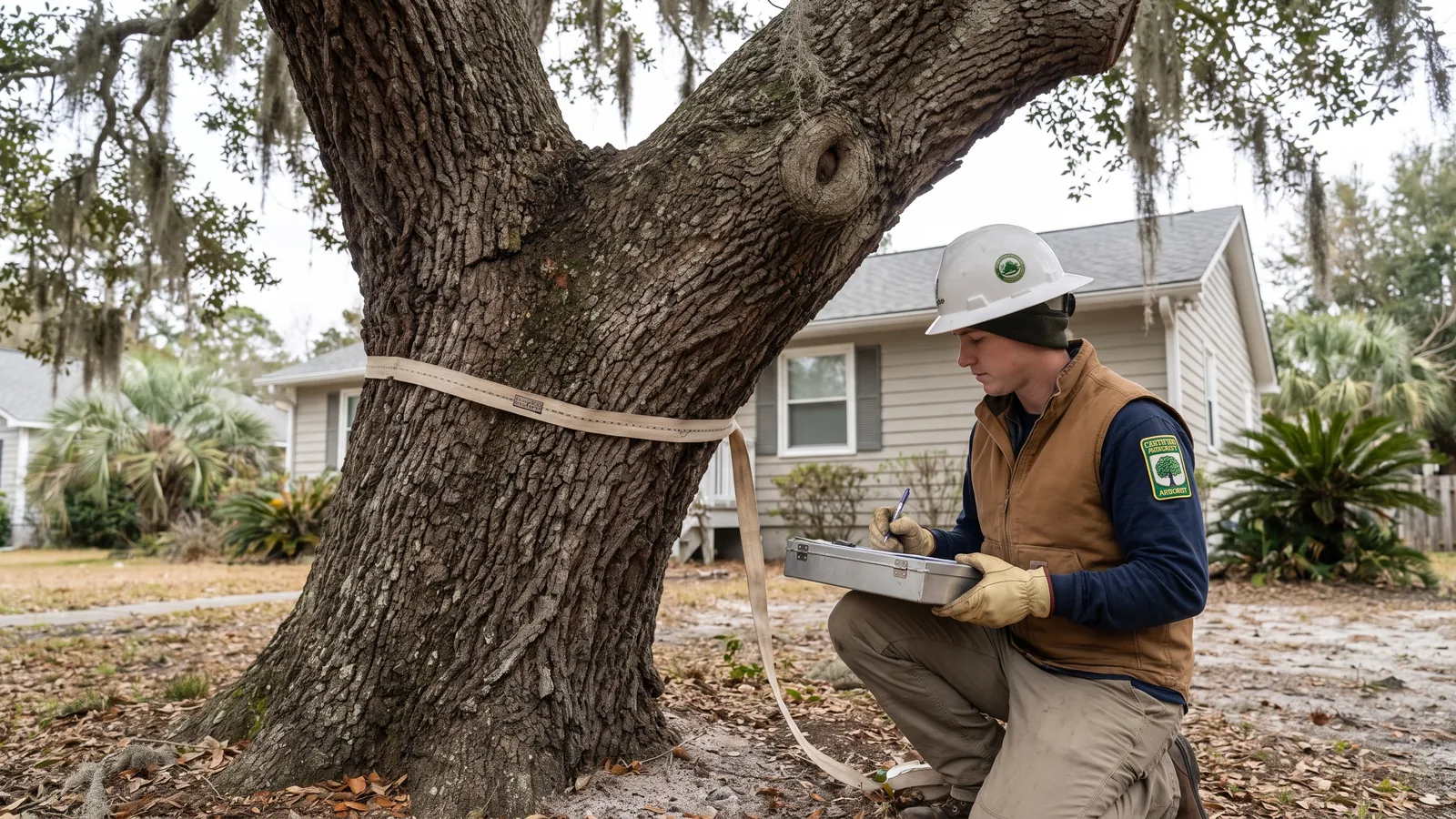
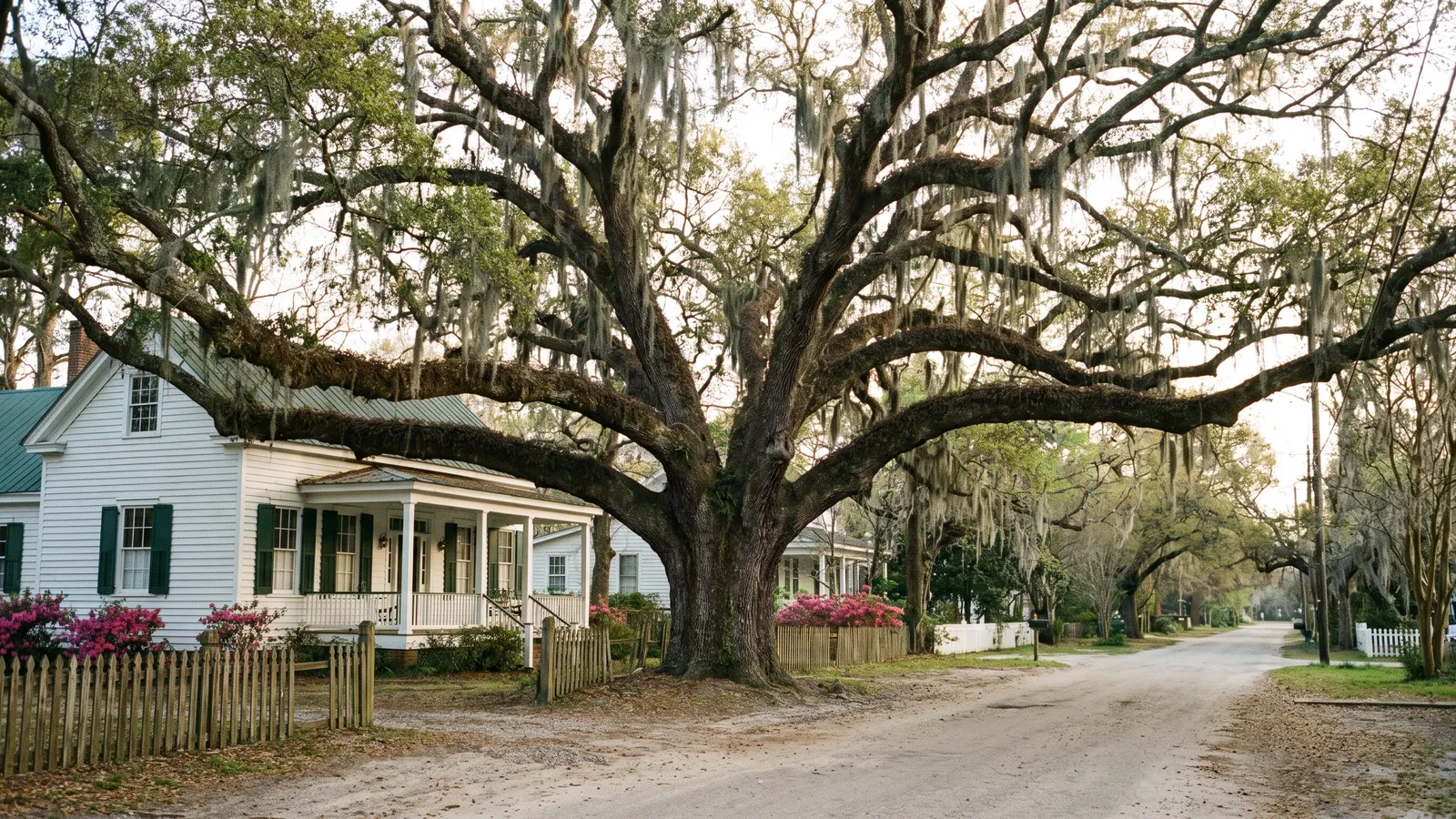
Nowhere else in South Carolina packs this many tree ordinances into sixty miles. The City of Myrtle Beach regulates significant trees (live oak, white oak, red cedar, magnolia and bald cypress from four inches) and landmark trees (live oak from 25 inches, laurel and willow oak from 30, magnolia and cypress from 30, holly from 20, dogwood from 15) on every lot, requires a certified arborist's documentation for a landmark removal, mitigates at two-and-a-half-inch caliper replacements or $400 a tree, holds the owner and the tree cutter both liable, and fines $10,000 per landmark tree. Unincorporated Horry County protects every live oak 24 inches and up as a specimen — on house lots since 2023 — with ZBA variances, a survey requirement and a two-year permit block for violations. North Myrtle Beach lets homeowners cut anything to 16 inches, sends 16-to-24-inch trees to a permit with half-inch-per-inch replacement, and trees over 24 inches to the Board of Zoning Appeals, with a $300-per-caliper-inch mitigation bank. Conway protects dogwoods from four inches, live oaks and a dozen listed hardwoods from eight, other oaks from 14, calls every 24-inch live oak and every tree on the Oaks of Conway map a landmark, requires a permit even to prune one, and makes paid tree workers sign an affidavit. Surfside Beach requires a permit for any tree over eight inches on an existing home lot, fines up to $10,000 for a landmark, and passed first reading of a rewrite in August 2026 that would drop the permit line to three inches and bar violating contractors for three years. Georgetown County protects every tree 10 inches and up on the Waccamaw Neck, house lots included, and fines up to $500 per inch. The Town of Pawleys Island protects hardwoods from five inches, fines $500 per inch, and can ban a contractor from the island.
What that means for you is that the question 'can I remove this tree?' has seven answers, and the cheap crew that 'doesn't bother with permits' is the most expensive crew on the Strand. Our ISA Certified Arborist does the work the ordinances actually ask for: measures the tree at breast height, identifies the species, assesses it for hazard, disease and decline to the ISA's tree risk assessment standard, and writes the report in the form the town wants. Then we file the application, calculate the mitigation, and show up at the Tree Board or the Zoning Board of Appeals when the tree needs a hearing. When the tree qualifies, the removal gets approved. When it doesn't, we tell you that too, and we prune instead — because we write letters for trees that have earned them, not to order, and the towns know the difference.
What's included
Jurisdiction check
Which rule your parcel is under — city, county, town or the Neck — and the threshold for your species.
DBH measurement & species ID
Measured at 4.5 feet with a diameter tape; live, sand live, laurel or water oak confirmed.
Hazard & condition assessment
To the ISA tree risk assessment standard: decay, cavities, lean, root plate, dieback, with photos.
The written report
In the form each town asks for — Myrtle Beach's certified-arborist documentation, Horry's survey, Surfside's landmark letter.
Application & mitigation
Filed for you, replacement trees or fee-in-lieu calculated, notice of completion sent (Myrtle Beach wants it within five days).
Hearings
Conway Tree Board, Horry ZBA, North Myrtle Beach BZA, Pawleys ARB — we present the case.
Permit and report costs on the Grand Strand
| Job | Typical price | Notes |
|---|---|---|
| Permit check and application, straightforward removal | Included with the job | Most hazard and dead-tree removals |
| Arborist hazard assessment and letter | $150 – $350 | Credited toward any work we do |
| Protected-tree survey, building lot | $250 – $600 | Horry County and Myrtle Beach |
| Variance or board hearing (ZBA, BZA, Tree Board) | $300 – $750 | Preparation and attendance |
| Town fees and mitigation | Pass-through | Conway free; Myrtle Beach up to $400/tree; Horry $150–$300/tree; NMB $300/caliper inch |
| Written report for a sale, HOA or insurer | $150 – $350 | Condition, risk, recommendations, photos |
These are 2026 Grand Strand ranges so you can budget. Your written price is itemized — the climb or bucket work, rigging, chipping and haul-off, stump grinding, crane time, the permit for your town — and good for 30 days.
Recent work
Questions we get about tree permits
Is a permit really needed for one tree in my yard?
In Myrtle Beach, only if it's a significant species over four inches. In Horry County, only if it's a live oak over 24 inches. In North Myrtle Beach, only over 16 inches and never for a pine. In Surfside, over eight inches. On the Neck, over 10 inches. We tell you in the first five minutes of the estimate.
What happens if I just cut it?
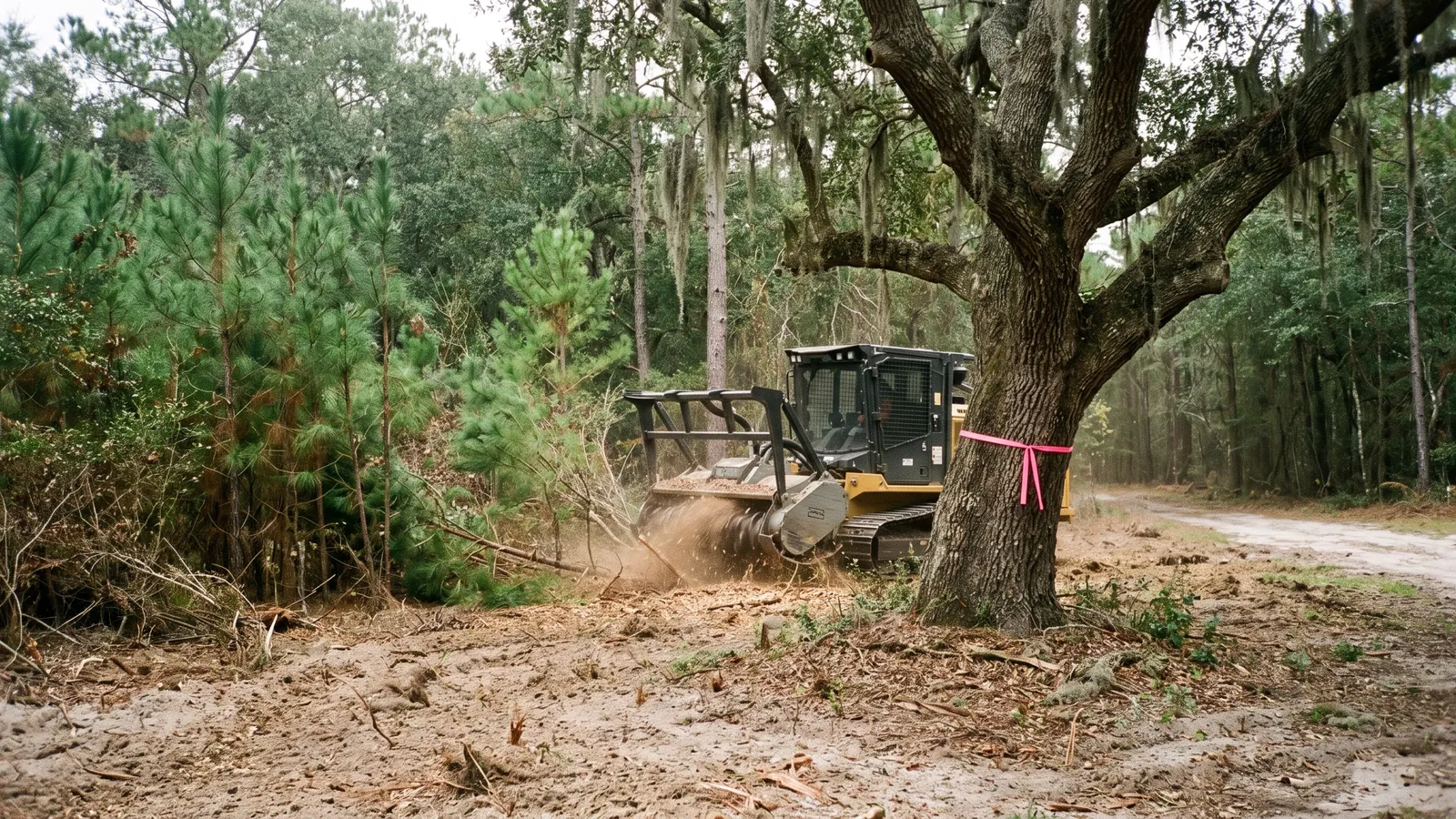
In Myrtle Beach, a landmark tree is $10,000 and you and the cutter both owe it. In Horry County, no building permits on the parcel for two years. On the Neck, up to $500 an inch — $12,000 for a 24-inch tree. In Pawleys, the same plus the contractor is barred. The towns do enforce it, and the stump is evidence (Georgetown County assumes 24 inches if the stump is gone).
Can you write me a letter saying my oak is dangerous?
If it is. Our arborist assesses it to the ISA standard and writes what the tree shows. The towns know which arborists write to order, and a letter that doesn't hold up gets the removal denied and the owner fined. A hollow, split or declining oak gets its letter; a healthy one gets a pruning plan.
Who pays the mitigation?
The owner — it's a condition of the permit. We calculate it up front so it's in the written price: replacement trees you plant (we can supply and plant them) or the fee-in-lieu.
How long does a permit take?
A hazard removal in Myrtle Beach or Horry County is usually days. A Conway Tree Board or Horry ZBA hearing is weeks, on their meeting calendar. Emergencies during a declared storm are waived. We tell you the timeline before you decide.